

Best AI Tools and Platforms Worth Using in 2026
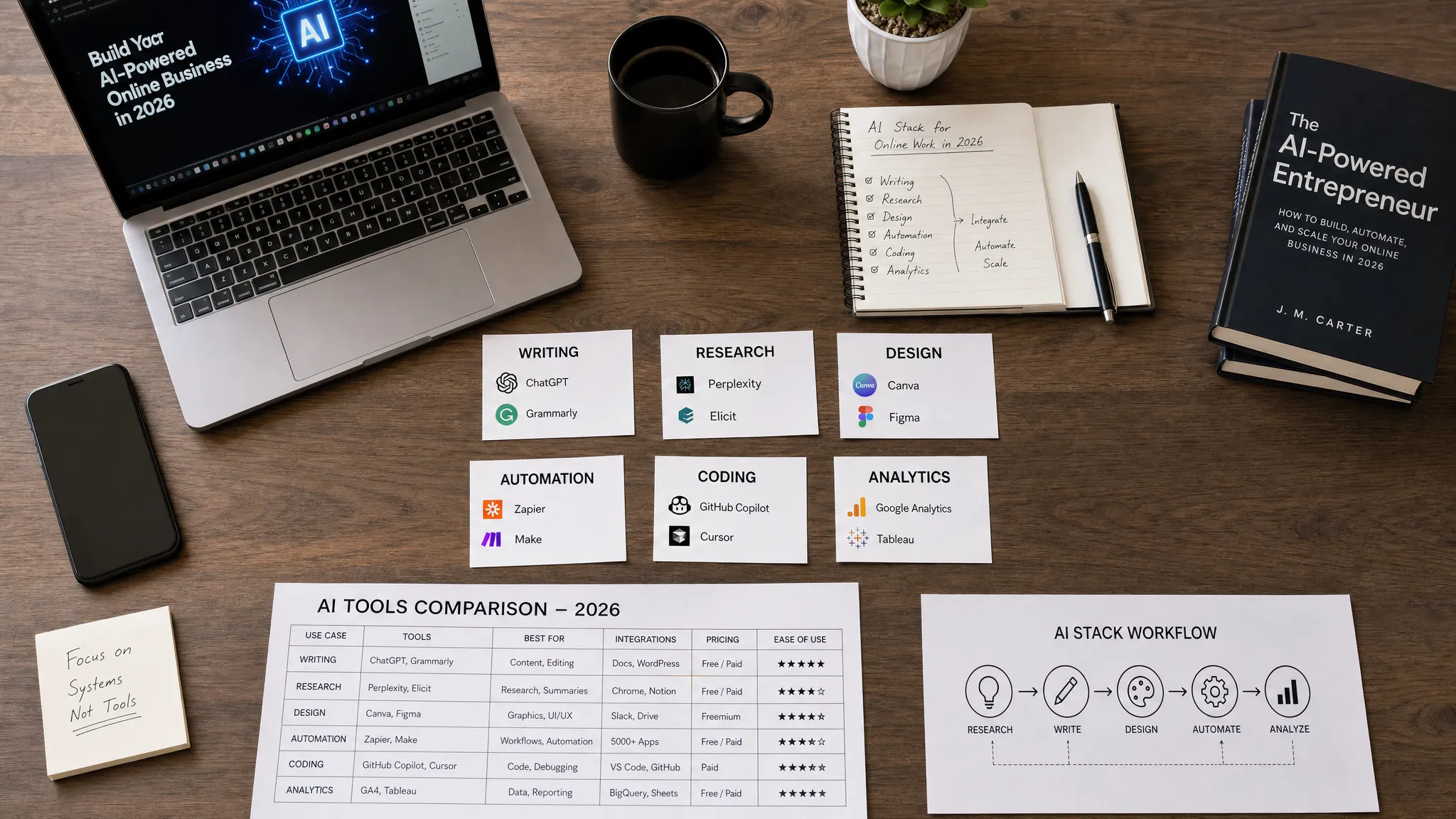
Creating content consistently is one of the hardest parts of building an audience, growing a website, or running an online business. Research takes time. Drafting takes time. Editing, visuals, SEO, publishing, and repurposing often take even longer.
That is where AI tools for content creation can save hours, if you use them strategically. The goal is not to let AI replace your ideas, expertise, or voice. The goal is to remove repetitive work, speed up production, and give you more time for strategy, creativity, and quality control.
AI adoption has moved far beyond experimentation. The Stanford AI Index Report shows how quickly organizations are integrating AI into real workflows. For creators, marketers, bloggers, freelancers, and small businesses, the advantage is no longer just using AI. The advantage is knowing which tools actually improve your content process.
This guide focuses on practical AI content creation tools that help with research, writing, design, video, SEO, automation, and repurposing.
What makes an AI content creation tool worth using?
A good AI tool should save time without lowering quality. If a tool creates generic content that needs heavy rewriting, it may not be saving you time at all. The best tools help you move faster through specific stages of the content workflow while keeping human judgment in the process.
Before adding another subscription, ask what bottleneck you are trying to fix. Are you spending too much time researching? Do you struggle with outlines? Are social media graphics slowing you down? Do you need help repurposing long-form content into emails, posts, and scripts?
| Content workflow stage | What AI can help with | What still needs human input |
|---|---|---|
| Research | Topic discovery, source finding, competitor review, audience questions | Fact-checking, expert judgment, original insights |
| Planning | Content briefs, outlines, calendars, angle generation | Strategy, positioning, prioritization |
| Writing | Drafts, rewrites, introductions, summaries, emails | Voice, expertise, examples, final edits |
| SEO | Search intent, structure, optimization suggestions | Real value, originality, topical authority |
| Design | Graphics, presentations, thumbnails, lead magnets | Brand taste, layout decisions, visual consistency |
| Video | Scripts, captions, rough edits, short-form ideas | Storytelling, pacing, performance, final review |
| Repurposing | Turning one asset into multiple formats | Channel strategy, audience fit, quality control |
The best AI content stack is usually small. Most creators do not need 15 tools. They need a reliable assistant, a research tool, a writing or editing workflow, a design tool, and maybe an SEO or automation platform.
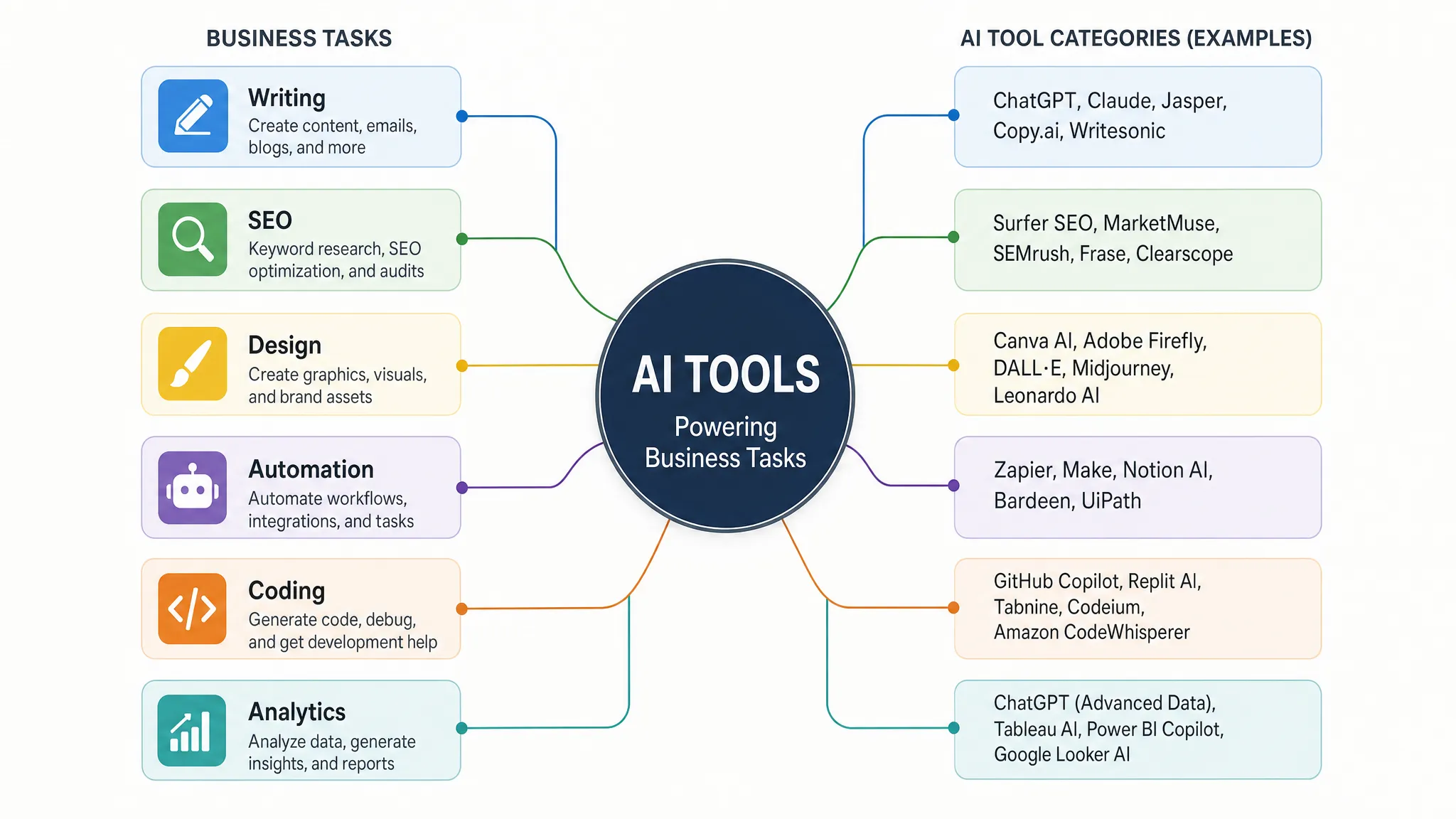
Quick comparison: AI tools for content creation that save hours
Here is a practical comparison of AI tools worth considering for content workflows. You do not need all of them. Choose based on the type of content you create most often.
| Tool | Best for | How it saves time | Best fit |
|---|---|---|---|
| ChatGPT | Brainstorming, drafting, editing, content workflows | Speeds up ideation, outlines, drafts, summaries, and repurposing | Creators, marketers, freelancers, teams |
| Claude | Long-form writing and editing | Helps polish drafts, structure complex ideas, and refine tone | Writers, editors, consultants |
| Gemini | Google-connected productivity | Useful for users already working in Google apps | Google Workspace users, students, teams |
| Perplexity | Research and source discovery | Finds source-linked answers and topic context quickly | Bloggers, SEO writers, researchers |
| Notion AI | Content planning and knowledge management | Turns notes into briefs, summaries, and organized content systems | Creators, teams, project managers |
| Canva AI | Graphics, presentations, social content | Speeds up visual production for non-designers | Marketers, small businesses, creators |
| Midjourney | AI image generation | Creates visual concepts, campaign ideas, and creative assets | Designers, creators, brand builders |
| Adobe Firefly | Creative asset generation and editing | Fits AI image tools into Adobe workflows | Designers, agencies, creative teams |
| Runway | AI video generation and editing | Helps with short clips, visual effects, and video concepts | Video creators, agencies, marketers |
| Descript | Audio and video editing | Makes editing podcasts and videos faster through text-based workflows | Podcasters, YouTubers, educators |
| Surfer SEO | SEO content optimization | Helps align articles with search intent and on-page signals | Bloggers, affiliate marketers, SEO teams |
| Semrush | SEO and competitor research | Speeds up keyword research, audits, and topic planning | SEO professionals, agencies, affiliate sites |
| Zapier AI | Workflow automation | Automates repetitive publishing, lead, and content tasks | Solopreneurs, agencies, operations teams |
Best AI writing tools for faster content production
ChatGPT
ChatGPT is one of the most versatile AI tools for content creation because it can support nearly every stage of the process. You can use it to brainstorm article ideas, create outlines, rewrite sections, simplify complex topics, draft email sequences, generate social posts, and turn one piece of content into multiple formats.
Its biggest advantage is flexibility. A blogger can use it to plan a content calendar. A freelancer can turn client notes into a proposal. A marketer can transform a webinar transcript into a blog post, newsletter, and LinkedIn post.
The key is to avoid treating ChatGPT as an autopilot writer. The strongest results come when you give it context, examples, audience details, and a clear goal. Use it to create momentum, then add your experience, data, examples, and editing.
Claude
Claude is especially useful for long-form writing, editing, and restructuring complex ideas. Many content creators like it for turning rough notes into polished drafts while keeping the tone natural.
It can help with blog posts, newsletters, reports, product descriptions, landing page copy, internal documents, and thought leadership content. If you already have a messy draft, Claude can help improve flow, remove repetition, and make the structure clearer.
Claude is a strong choice when quality matters more than speed alone. It is especially helpful for creators who want AI support but still care about nuance and readability.
Gemini
Gemini is a practical option for creators who already work inside Google’s ecosystem. If your content workflow lives in Google Docs, Sheets, Gmail, Drive, or Workspace, Gemini can feel more natural than adding another separate tool.
It can help summarize notes, draft documents, generate content ideas, review information, and assist with day-to-day productivity. For students, teams, and creators who rely heavily on Google tools, ecosystem fit is the main advantage.
Best AI research tools for content creators
Research is often the most time-consuming part of content creation. AI can make the process faster, but it should not replace source verification.
Perplexity
Perplexity is valuable because it focuses on research and source-linked answers. Instead of only generating text, it helps you explore a topic, find references, compare viewpoints, and identify questions your audience may ask.
This makes it useful for bloggers, SEO writers, affiliate marketers, and newsletter creators. You can use it to understand a new topic, collect supporting sources, compare products, and build a better content brief.
Still, you should always open the sources and verify the claims. AI research tools can speed up discovery, but final responsibility stays with the creator.
Semrush
Semrush is useful when content creation is tied to SEO. It helps with keyword research, competitor analysis, content gaps, site audits, and topic planning.
For bloggers and affiliate marketers, Semrush can help identify topics with traffic potential. For agencies, it can support audits, reporting, and campaign planning. Its value is not just AI assistance, but the depth of SEO and competitive data.
If you are just starting, you may not need a premium SEO platform immediately. Start with a clear publishing strategy, then upgrade when you are creating consistently or managing client work.
For a broader foundation, read our guide on SEO for beginners in 2026.
Best AI tools for content planning and organization
Notion AI
Notion AI is a strong option if you already use Notion for notes, content calendars, project management, documentation, or idea storage.
Its real strength is helping creators organize information. You can summarize research notes, turn meeting notes into tasks, create content briefs, rewrite rough ideas, and manage a publishing workflow in one place.
For teams, Notion AI can support internal documentation, campaign planning, meeting summaries, and knowledge management. For solo creators, it can become a central content operating system.
Trello, Asana, and project management AI
Many project management platforms now include AI features for summaries, task creation, project updates, and workflow organization. These tools are useful when content creation involves multiple steps or team members.
AI inside project management is not usually the most exciting use case, but it can save hours by reducing admin work. If you manage writers, designers, editors, or clients, faster summaries and clearer task handoffs can make a real difference.
Best AI design tools for creators and marketers
Canva AI
Canva is one of the most practical AI content tools for non-designers. It helps create social media graphics, blog images, lead magnets, presentations, thumbnails, simple videos, and branded assets.
For creators and small businesses, Canva saves time because it combines templates, editing tools, brand assets, and AI features in one interface. You can go from idea to finished visual much faster than starting from scratch.
Canva is not a replacement for high-end brand design, but it is excellent for daily content output. If you publish on LinkedIn, Instagram, Pinterest, YouTube, email, or a blog, it can remove a major creative bottleneck.
Midjourney
Midjourney is useful for artistic visuals, concept images, mood boards, thumbnails, and campaign inspiration. It is especially strong when you want visuals that feel more distinctive than standard stock images.
Creators can use it for idea generation, brand concepts, visual storytelling, and creative exploration. Agencies can use it during brainstorming or pre-production.
Before using AI-generated images commercially, review usage rights, client requirements, and platform policies. This matters for paid ads, product visuals, and brand campaigns.
Adobe Firefly
Adobe Firefly is worth considering for creators and design teams already working with Adobe products. Its advantage is integration with professional creative workflows rather than acting as a separate experimental tool.
Explore a Premium Online Opportunity
Discover selected digital offers and online tools that may help you grow your projects, business, and productivity.
Firefly can help generate, edit, and modify assets faster. It is especially relevant for teams that care about brand consistency, production quality, and compatibility with tools like Photoshop and Illustrator.
Best AI video and audio tools that save editing time
Runway
Runway is one of the leading AI video tools for creators and marketers experimenting with video generation, editing, effects, and visual storytelling.
It can help produce short clips, test video concepts, create creative effects, and speed up production workflows. This is useful for social media campaigns, ads, YouTube concepts, product storytelling, and creative experiments.
AI video still requires strong human direction. The best results usually come from combining AI-generated clips with good scripts, clear pacing, strong editing, and brand consistency.
Descript
Descript is a practical tool for podcast, video, and short-form content editing. Its text-based editing workflow can make audio and video editing feel more like editing a document.
This can save hours for creators who produce interviews, tutorials, courses, podcasts, or YouTube videos. Instead of manually scrubbing through timelines, you can work from transcripts, remove sections faster, and repurpose longer recordings into shorter assets.
As always, review final outputs carefully. AI editing can speed up the workflow, but human judgment is still needed for pacing, clarity, and tone.
Best AI tools for SEO content optimization
Surfer SEO
Surfer SEO helps content creators align articles with search intent and on-page optimization signals. It can support briefs, structure, keyword coverage, and competitive analysis.
The important point is to avoid writing only for a score. A high optimization score does not guarantee rankings if your content lacks originality, expertise, useful examples, or clear answers.
Use Surfer as a guide, then improve the article with real experience, screenshots, comparisons, examples, and stronger explanations. SEO content should be helpful first and optimized second.
AI assistants for content refreshes
One of the fastest ways to save time is using AI to refresh existing content. Instead of writing every article from scratch, use AI to identify outdated sections, summarize missing topics, improve headings, rewrite weak introductions, and generate FAQ ideas.
This is especially useful for blogs with older posts. A content refresh can often be faster than creating a brand-new article, and it may improve performance if the topic still has search demand.
Best AI automation tools for content workflows
Zapier AI
Zapier helps connect apps and automate repetitive tasks. For content creators, this can be a major time saver.
For example, a new form submission can create a task, save the contact in a CRM, notify your team, and add the person to an email list. A published blog post can trigger a social media task, newsletter draft, or internal update.
AI can also help classify messages, summarize inputs, draft responses, and route tasks based on context.
Make
Make is another strong automation platform, especially for users who want visual workflow building and more customized automations.
It can be useful for agencies, content teams, ecommerce businesses, and advanced creators who need multi-step workflows. If you manage a lot of repetitive content operations, automation may save more time than another writing tool.
Recommended AI content stacks by creator type
The smartest approach is to build a focused stack around your main content channel. Here are practical combinations.
| Creator type | Suggested AI stack | Why it works |
|---|---|---|
| Blogger | ChatGPT or Claude, Perplexity, Surfer SEO, Canva | Covers research, writing, optimization, and visuals |
| Affiliate marketer | Perplexity, Semrush, Claude, Canva, email platform | Supports comparison content, SEO, trust-building, and list growth |
| Freelance writer | Claude, ChatGPT, Grammarly, Notion AI | Helps with drafts, editing, briefs, and client organization |
| Social media creator | ChatGPT, Canva, Midjourney, Notion AI | Speeds up ideas, graphics, captions, and content planning |
| YouTube creator | ChatGPT, Canva, Descript, Runway | Helps with scripts, thumbnails, editing, and video concepts |
| Digital agency | Semrush, HubSpot, Zapier, Canva, ChatGPT | Supports research, CRM, automation, creative output, and reporting |
| Course creator | Claude, Descript, Canva, Notion AI | Helps with lessons, scripts, slides, editing, and organization |
If your goal is online income, choose tools that support a monetizable workflow. Freelancers need proposal, delivery, and client communication tools. Bloggers need research, SEO, writing, and email capture. Agencies need repeatable processes, reporting, automation, and collaboration.
For more ideas, read our guide on how to make money online using AI tools.
How to use AI tools without creating generic content
AI can make content faster, but it can also make content weaker if you rely on it too heavily. Generic articles, repetitive social posts, and bland email copy do not build trust.
Use AI for speed, but add the elements that only you can provide: experience, opinions, examples, screenshots, product tests, customer insights, original analysis, and a clear point of view.
A simple workflow works well:
- Use AI to research the topic and identify common questions.
- Create a brief with the target audience, search intent, angle, and desired outcome.
- Draft the first version with AI assistance or your own notes.
- Add personal examples, expert insight, data, and original observations.
- Edit for accuracy, structure, tone, and usefulness.
- Repurpose the final piece into emails, social posts, scripts, or visuals.
For organizations, governance matters too. The NIST AI Risk Management Framework is a useful reference for thinking about privacy, reliability, safety, and oversight when using AI at scale.
Common mistakes to avoid
The biggest mistake is subscribing to too many overlapping tools. If three apps do the same job, pick the one that fits your workflow best and cancel the others.
Another mistake is measuring AI output by volume instead of quality. Publishing more content is not valuable if it does not help your audience or support your business goals.
You should also avoid trusting AI research without checking sources. AI can summarize quickly, but it can misunderstand context, miss recent updates, or present weak sources confidently.
Finally, do not ignore distribution. AI can help create content, but your results still depend on SEO, email, social media, partnerships, community, paid promotion, or another traffic strategy. If email is part of your strategy, read our guide to email marketing in 2026.
Frequently Asked Questions
What are the best AI tools for content creation? The best AI tools for content creation include ChatGPT, Claude, Gemini, Perplexity, Notion AI, Canva, Midjourney, Adobe Firefly, Runway, Descript, Surfer SEO, Semrush, Zapier, and Make. The right choice depends on whether you create articles, videos, graphics, emails, or social content.
Which AI tool saves the most time for writers? ChatGPT and Claude are usually the most useful for writers because they help with brainstorming, outlining, drafting, rewriting, summarizing, and editing. Claude is especially strong for long-form refinement, while ChatGPT is very flexible for broad content workflows.
Can AI tools create SEO content? Yes, AI tools can help with SEO content research, outlines, drafts, briefs, and optimization. However, rankings still depend on search intent, helpfulness, authority, originality, technical SEO, and trust. AI should support the process, not replace expertise.
Are AI design tools good enough for business content? AI design tools like Canva, Adobe Firefly, and Midjourney can be excellent for social media graphics, thumbnails, presentations, concepts, and marketing assets. For major brand identity work, high-value campaigns, or complex design systems, professional design judgment is still important.
How many AI content tools do I really need? Most creators can start with three to five tools: one AI assistant, one research tool, one design tool, one organization tool, and one SEO or automation tool if needed. A focused workflow is better than a large stack you rarely use.
Can AI replace content creators? AI can automate parts of content production, but it does not replace strategy, taste, lived experience, audience understanding, or trust. The best creators use AI to work faster while adding human insight and quality control.
Final thoughts
AI tools for content creation can save hours every week, but only when they are connected to a clear workflow. Start with your biggest bottleneck, then choose tools that solve that specific problem.
If research slows you down, test Perplexity or Semrush. If writing takes too long, compare ChatGPT and Claude. If visuals are the bottleneck, try Canva, Midjourney, or Adobe Firefly. If editing video drains your time, explore Descript or Runway. If repetitive admin work is the issue, automation tools like Zapier and Make may deliver the biggest return.
The best content creators in 2026 will not be the ones using the most AI tools. They will be the ones using the right tools with strong strategy, clear taste, and consistent human judgment.
AI Tools Hub Gr publishes updated reviews, comparisons, tutorials, and online business guides to help you choose tools with confidence. Explore more resources on AI Tools Hub Gr, browse guides by category, and build a smarter content workflow with AI.

Questions & Comments
Ask something about this post or request help from the community.
No comments yet. Be the first to ask a question.